Thanks!
If you liked this, we would love for you to share it with more people.


The travel and tourism industry never sits still.
And AI is about to make it move a lot faster, with $78 billion in travel revenue projected to flow through AI platforms by 2026. For businesses still relying on manual processes and legacy systems, the challenge is bigger than keeping up with a new technology.
And AI is only one part of the shift.
Here are other digital trends shaping the travel and tourism industry in 2026.

From AI-powered travel planning to connected booking platforms and digital identity, technology is reshaping how travelers discover, book, and experience their trips. The following eight trends highlight where travel technology is heading in 2026 and what these developments mean for businesses looking to improve customer experience, streamline operations, and stay competitive.
AI in travel is moving beyond chatbots for travel and booking toward AI agents that can access live business data and execute workflows. The bigger opportunity is no longer the interface itself, but how these systems can work across booking, inventory, loyalty, and customer platforms to resolve requests.
Retrieval-Augmented Generation (RAG) helps ground these systems in current, business-specific information, including booking policies, inventory, loyalty rules, property data, and customer records. Strong access controls and data governance are essential to determine what information AI can use and what actions it can take.
As AI takes on more operational tasks, controlled autonomy becomes increasingly important. Routine workflows can be automated, while sensitive cases, high-value transactions, and difficult-to-reverse actions can remain subject to human approval.
Personalization is becoming more sophisticated as travel businesses combine customer profiles, booking history, loyalty information, behavioral signals, real-time context, and AI-powered recommendations. These inputs allow businesses to move beyond basic recommendations and tailor experiences to what travelers are likely to need at different points in their journey.
For example, a returning guest might receive room or activity recommendations based on previous stays, while a booking platform could surface destinations, upgrades, or add-ons based on a traveler’s preferences and current trip context. Predictive systems can take this further by identifying when a traveler may need assistance, an itinerary update, or a relevant offer.
As personalization becomes more data-driven, responsible data use becomes increasingly important. The goal is to make travel more convenient without making customers feel watched or overwhelmed. Clear consent practices, strong data governance, and meaningful customer controls should therefore be built into the personalization strategy alongside the technology.
For travel businesses still operating with disconnected legacy systems, modernizing the integration layer can be as important as launching a new customer-facing application.
A major technology shift in travel is happening behind the interface. Travelers may see a single website or mobile app, but delivering a seamless journey requires the underlying travel tech stack to work together, including booking engines, central reservation systems (CRS), property management systems (PMS), global distribution systems (GDS), channel managers, payment platforms, loyalty systems, and customer data platforms.
Travel APIs and modern integration architectures connect these systems and enable near-real-time data exchange. Reliable integration helps reduce manual processes, keep availability and pricing consistent across channels, and give travel businesses a more complete view of each traveler.
Mobile travel experiences increasingly rely less on standalone apps. As more interactions move across mobile web, messaging, digital wallets, and third-party platforms, the underlying systems need to support those channels without duplicating the same functionality.
When those services are built around individual applications, expanding to another channel can require new integrations and duplicated business logic. A check-in service connected to a hotel’s PMS and booking system, for example, may need additional integration work before it can support another platform.
A reusable API layer allows the same core services to support different interfaces. Booking, check-in, and payment capabilities can be maintained centrally and exposed wherever customers interact with the business.
For travel businesses expanding across direct and third-party channels, this architecture can reduce the cost and development effort of each new digital experience while making the existing technology stack more reusable.
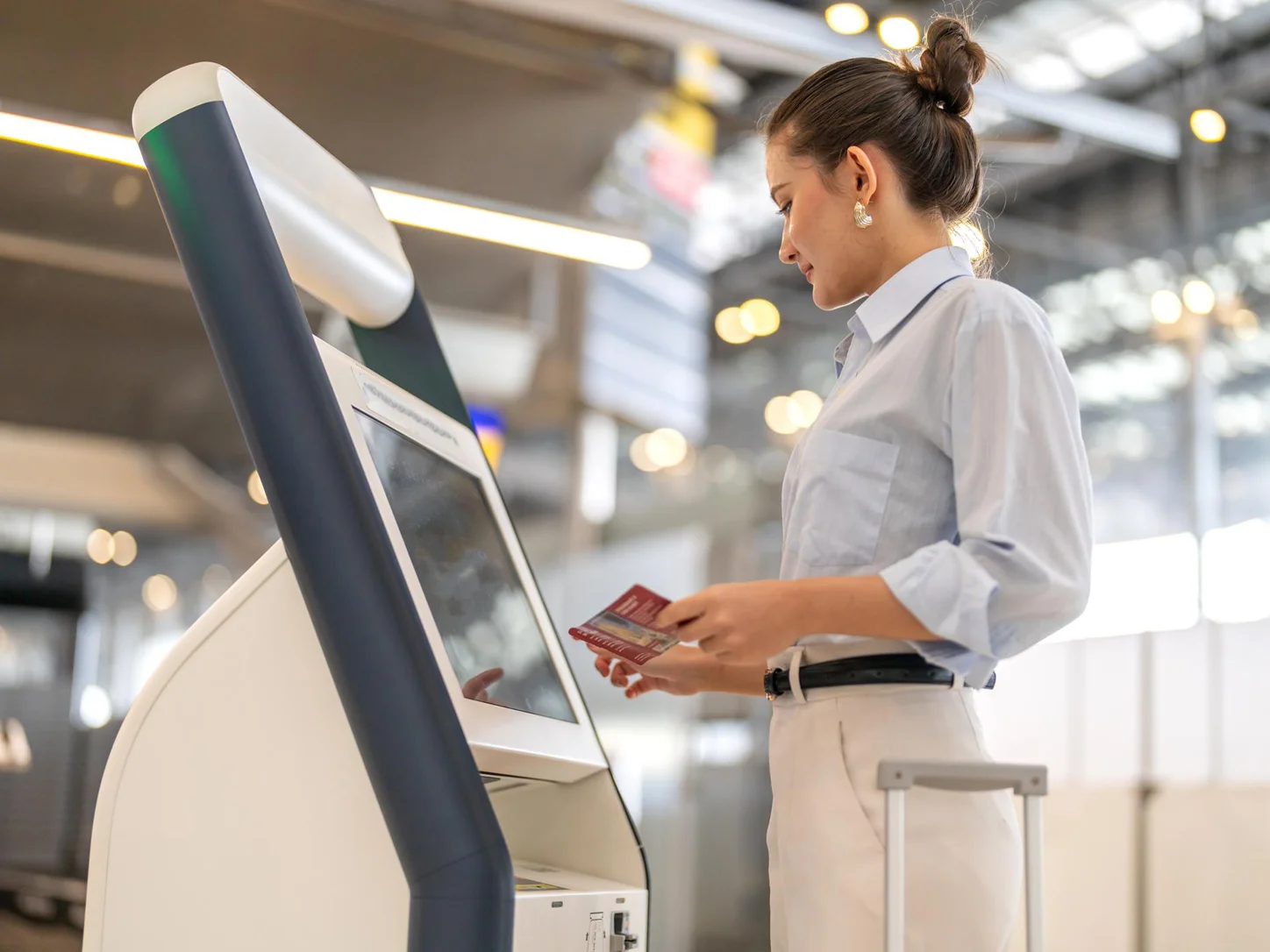
Travel identity is moving toward credentials that can be issued and verified across airlines, airports, governments, and travel providers. IATA's One ID is already being tested or implemented by more than 50 airlines and 40 airports, with recent proofs of concept combining digital wallets, credential sharing, and biometric verification.
Reusable credentials also change what needs to sit behind the identity experience. An identity stack built around one biometric vendor or proprietary database may work well within its current environment, but introducing another credential provider can require new integrations and changes to existing passenger workflows. Provider-independent identity infrastructure can absorb those changes without rebuilding the surrounding systems.
The EU Digital Identity Wallet is another development pushing identity infrastructure in the same direction. Member States must make wallets available by the end of 2026, while Digital Travel Credentials are being developed as a compatible travel use case. Although the credentials are not yet in use across Member States, the interoperability model is already relevant to systems being designed today.
As more credential providers and standards enter the travel ecosystem, infrastructure that cannot exchange and verify standardized credentials will become increasingly expensive to extend.
Dynamic packaging is making the booking itself a revenue opportunity. Instead of selling a flight, hotel, transfer, or activity as separate purchases, travel businesses can assemble combinations based on live availability, pricing, and traveler preferences.
The additional value comes from how those products are packaged. A hotel can pair a room with airport transfers or activities, while an airline can add hotels, car rentals, or experiences based on what the traveler is already booking. Relevant combinations can increase booking value without requiring another customer acquisition cycle.
The same data can continue driving offers after checkout. Automation can trigger itinerary updates, payment events, service notifications, and relevant add-ons based on what the traveler has already purchased, extending the opportunity beyond the initial transaction.
AR and VR are becoming more commercially relevant as travel companies use them to influence high-value booking decisions and improve in-destination experiences.
Before booking, immersive views can reduce uncertainty around hotels, cruise cabins, resorts, attractions, and venues, giving travelers a better sense of the product before they commit.
During the trip, AR can add navigation, cultural interpretation, accessibility guidance, and attraction information directly to the physical environment.
The strongest use cases improve discovery, reduce booking uncertainty, or enrich the experience, making their impact easier to measure than immersive technology used primarily for novelty.
Sustainability technology is becoming increasingly important for travel businesses looking to manage operating costs, meet environmental reporting requirements, and improve resource efficiency.
Although the EU's 2026 Omnibus I reforms have reduced sustainability reporting obligations for some companies, travel businesses may still need reliable environmental data to meet the expectations of corporate customers, investors, and supply chain partners.
The challenge is that this information often sits across disconnected systems. Hotels collect energy, water, and procurement data, while airlines track fuel consumption, fleet operations, and route efficiency. Consolidating these sources can require significant manual effort.
Integrating environmental data into existing business systems creates opportunities beyond compliance. Hotels can identify properties with excessive energy consumption, airlines can assess fuel efficiency across routes, and travel operators can use procurement data to identify waste and unnecessary costs.
The priority should be building reliable, reusable data systems rather than investing in standalone ESG reporting tools. This approach can reduce reporting overhead while helping businesses identify operational inefficiencies and make better investment decisions.
The eight trends above don't deserve equal investment. The priority should be the investment that removes a constraint affecting multiple initiatives.
For many established travel businesses, that means addressing integration before adding more capabilities. If core systems cannot reliably exchange data, investments in AI, personalization, mobile experiences, or automation will remain limited by the same underlying problem.
Improving APIs and integration architecture may be less visible than launching a new customer-facing feature, but it can reduce duplicated development, improve reliability, and make it easier to introduce new channels without rebuilding the same capabilities.
The same principle applies to other constraints. If integration is already working well, the priority may be data utilization, automation, security, or compliance.
Executives can therefore pressure-test a proposed technology investment against three questions:
The point is to invest in what is holding back multiple initiatives, rather than allocating budget based on which technology trend is getting the most attention.

The most important travel technology trends for 2026 point toward the same broader shift: more intelligent, connected, and frictionless travel experiences. Generative AI and AI agents are changing how travelers plan and receive support; personalization is becoming more predictive; APIs are connecting previously fragmented systems; and mobile, biometrics, automation, immersive experiences, and sustainability technology are reshaping different parts of the journey.
For travel businesses, competitive advantage will not come from adopting every new technology. The better investment is often the one that removes a technical constraint affecting several initiatives at once. Fixing that foundation can make future investments faster to deploy, less expensive to maintain, and easier to scale as customer behavior changes.