Thanks!
If you liked this, we would love for you to share it with more people.


.png)

Most healthcare organizations are still running systems built for a completely different era. This is where healthcare legacy system modernization becomes critical, especially as outdated systems struggle to keep up with modern demands.
Modernization often gets pushed aside; not because it’s unimportant, but because it feels risky. If a system is still running, why touch it? What if an upgrade disrupts operations, exceeds budget, or breaks critical functionality that no one fully documents?
Even so, waiting comes with its own costs. Inaction quietly erodes efficiency, increases compliance pressure, and limits your ability to respond to new opportunities.
The healthcare landscape is evolving rapidly. Telehealth, AI diagnostics, and digital health platforms are becoming standard, and patient expectations are rising. To stay competitive and deliver quality care, systems must be agile, interoperable, and secure.
Even when legacy systems appear functional, they carry hidden risks:
The longer these systems remain in use, the higher the operational risk and the harder it becomes to innovate, highlighting the urgency of legacy system modernization in healthcare.
When the risks are this high, waiting for a system failure is the most expensive way to recognize the value of modernization, including improved efficiency and scalability.The real advantage lies in acting proactively: turning legacy systems into strategic assets that reduce risk, streamline operations, and create a foundation for future growth.
Here are the key benefits that make it worth the effort.
Cloud-native systems can handle large volumes of requests quickly and reliably, reducing drop-offs and scheduling delays.
Refactoring focuses on cleaning up and restructuring legacy code to improve quality, performance, and maintainability. It doesn’t change what the application does, but transforms how it’s built and extended, making it a key step in modernizing legacy healthcare systems for long-term scalability.
Integrated messaging and notification tools let patients interact with providers without delays, improving care coordination and satisfaction.
With better data interoperability and real-time insights, healthcare providers can offer more tailored care recommendations and digital services.
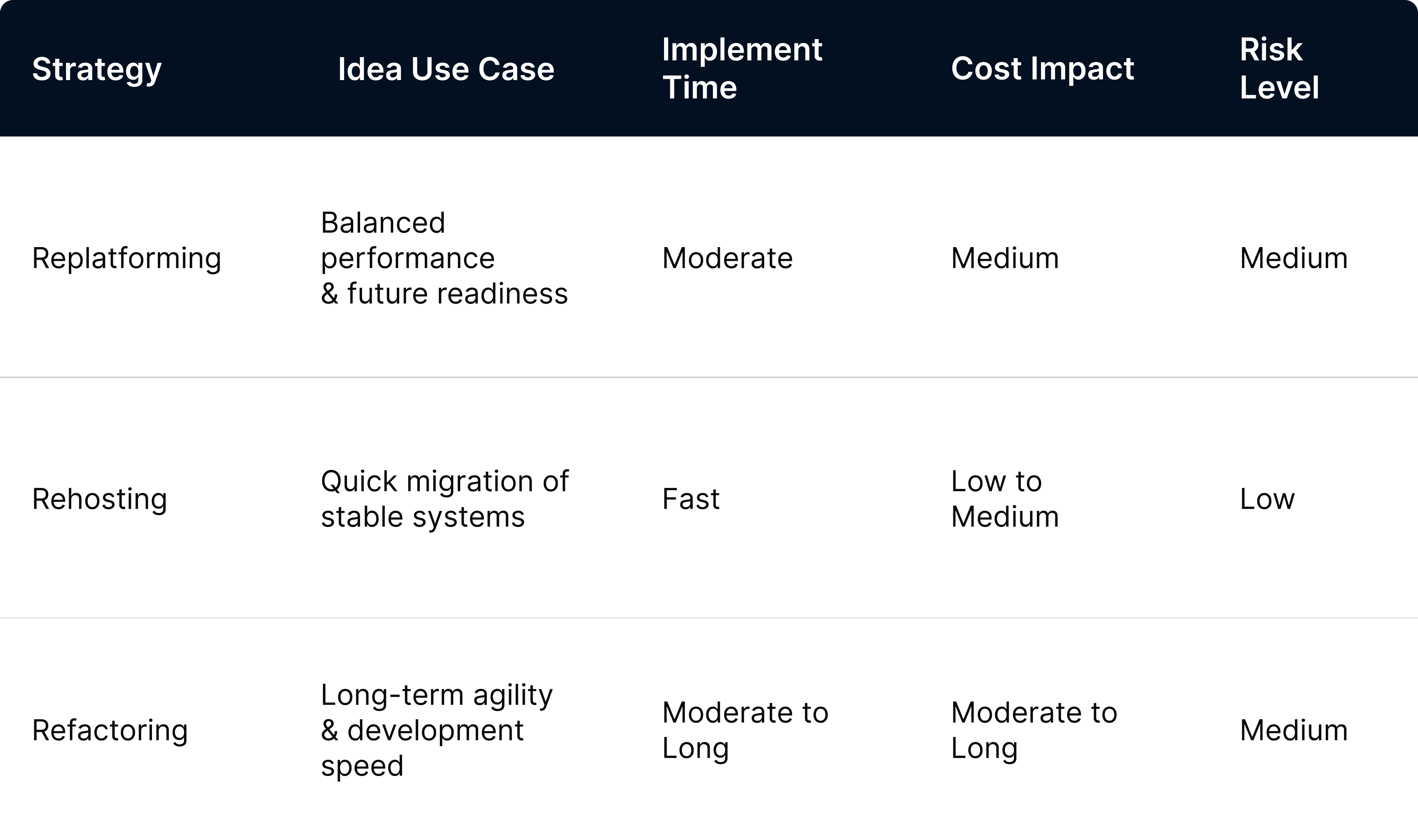
Modernizing your healthcare system doesn’t always mean tearing everything down. In fact, there are smarter, less disruptive ways to get up to speed. Approaches like rehosting, replatforming, and refactoring let you improve performance, preserve what already works, and adapt to today’s demands through ecctfafor performance, compliance, and user experience.
Now, let’s explore three approaches that make this possible:
Replatforming involves moving applications to a modern platform—often cloud-native—while keeping the core code and business logic largely intact. Unlike a full rewrite, it focuses on modernizing the underlying environment rather than the application itself. This approach unlocks the benefits of contemporary infrastructure, such as scalability, automation, and improved integration, without discarding the workflows, processes, and operational knowledge embedded in your existing systems.
Now that you understand the benefits, the next step is figuring out how to approach it effectively.
Start by moving less critical systems first—this lets your team get comfortable with the new platform without risking daily operations. Bring IT and security into the planning early to ensure everything integrates smoothly and remains compliant with healthcare standards. Track improvements along the way, and use automation to make future updates faster and more reliable.
Don’t forget to invest in replatforming automation tools and CI/CD pipelines to reduce deployment errors and speed up future releases.
Rehosting moves applications to modern infrastructure without changing the code, preserving existing workflows while improving reliability and performance. In fact, it is one of the fastest and most practical ways to modernize your systems, and here are more reasons why it works so effectively:
Start by auditing dependencies to understand how your applications interact with databases, services, and APIs. Use virtualization or containerization to simplify migrations and prevent environment issues. Finally, define measurable KPIs to track downtime, availability, and incident response, so you can quantify the benefits and make informed decisions about next steps in your modernization journey.
Rehosting also lays the groundwork for future replatforming or refactoring. Once an application is running in a scalable environment, it’s easier to iterate on infrastructure improvements or code enhancements.
If rehosting moves your applications and replatforming upgrades their environment, refactoring is where you transform the code itself. It focuses on cleaning up and restructuring legacy code to improve quality, performance, and maintainability. It doesn’t change what the application does, but transforms how it’s built and extended.
Pro Tips:
When refactoring healthcare systems, maintain test coverage across modules that deal with protected health information (PHI). This ensures compliance isn’t compromised during development.
Also, establish rollback procedures to reduce the impact of failed deployments. Automated testing frameworks and blue-green deployment strategies can help maintain availability during updates.
Selecting the best approach depends on your system’s architecture, team skill set, budget, and strategic goals.
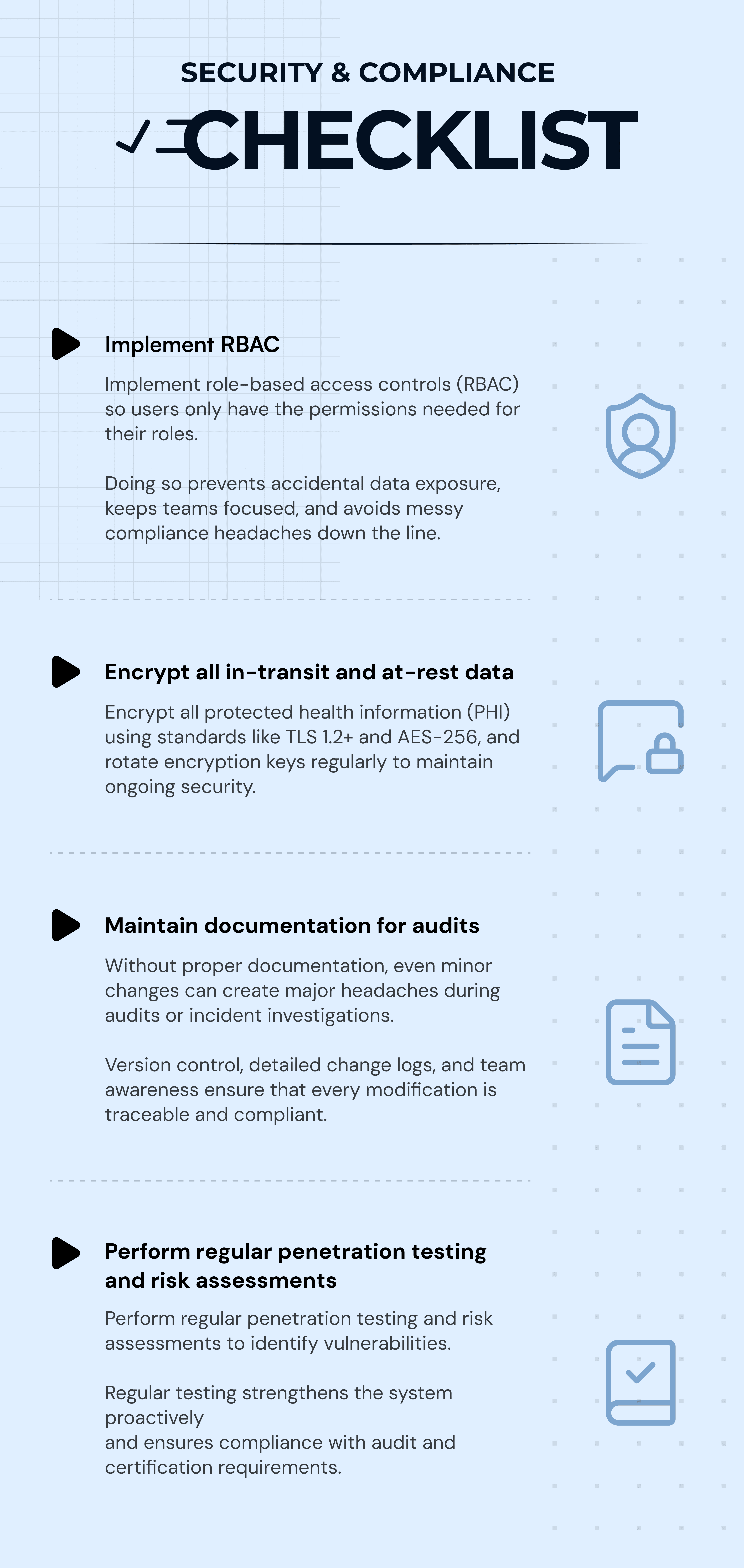
Modernization without compliance is a ticking time bomb. One overlooked regulation can mean fines, security breaches, and a hit to patient trust that no tech upgrade can fix.
That’s why compliance efforts should be tightly integrated into the modernization process. Aligning with HIPAA, HITECH, and HITRUST ensures your systems are not only modern but secure, reliable, and trusted by patients.
Legacy systems may still “work,” but every day they remain untouched, they cost time, money, and agility. The good news is that we have approaches that enable organizations to preserve critical workflows, reduce risk, and incrementally build a foundation for future innovation.
For healthcare leaders, the question isn’t whether to modernize; it’s how quickly and strategically you can move. Every incremental improvement compounds: the sooner you act, the faster your organization can adapt, innovate, and deliver care that meets the expectations of today’s patients — without discarding the value built into your existing systems.
Start your modernization journey with these key steps:

.jpg)