Thanks!
If you liked this, we would love for you to share it with more people.


Top%2010%20HealthTech%20Trends%20Shaping%20the%20Future%20of%20Healthcare%20in%202026_.png)

Healthcare organizations have spent the last five years making their software faster. The work, however, is still just as slow. These challenges are exactly why healthtech trends 2026 are shifting toward automation, intelligence, and operational efficiency.
Systems look more modern and feature-rich, yet core workflows remain manual and fragmented, with staff still moving information between tools and filling gaps that technology was meant to eliminate. Costs rise, clinicians burn out, and processes struggle to keep pace as demand grows.
Over time, the gap between investment and operational impact becomes harder to justify, prompting teams to rethink what healthcare software development should actually deliver.
Software is moving beyond systems that simply display data to platforms that take action, automate decisions, trigger workflows, and handle routine tasks without constant human intervention.
For tech teams, the question is no longer which tools look better, but which systems reduce workload, improve reliability, and deliver measurable operational impact.
The ten trends below highlight where that shift is occurring and where leading organizations are focusing their investments in emerging healthtech trends 2026 and digital transformation.
Most healthcare gamification fails because it focuses on points and badges. When you try to get patients to do everything, engagement spikes briefly and then fades, with little lasting impact. But if you focus on the few critical actions they tend to skip, and design your engagement methods around those specific actions, you get much better results.
Some of the most effective gamification strategies include:
The goal is simple: make adherence easier, so results improve over time.
As lab volume, complexity, and regulatory demands grow, traditional LIMS workflows begin to slow teams down. Reviews remain manual, issues surface late, and small delays compound across studies and trials, increasing operational risk.
Agentic systems approach the problem differently. Instead of simply storing data, they analyze it in real time, flag anomalies, and automatically trigger the next step. For teams, the immediate concern is disruption.
Does it require a total system overhaul? No.
Organizations extend existing systems and layer automation on top so routine decisions happen automatically. Common examples include:
The result is faster turnaround, fewer errors, and greater capacity without adding headcount.
The first wave of virtual care moved appointments online but didn’t really change much else. Clinicians still had to be there for every single interaction, which kept workloads high and constrained capacity.
With staffing shortages and rising demand, that approach is no longer sustainable in the evolving landscape of digital health trends 2026. Routine monitoring and follow-up now happen between visits through automated systems powered by emerging health technologies that run continuously in the background.
Shifting this work away from live encounters protects clinician time and allows organizations to support more patients without adding staff — a shift increasingly central to medical tech innovations shaping the future of healthcare.
“On average” is the most dangerous phrase in 2026 healthcare.
Averages hide outliers, and in medicine, those outliers are often the patients who need the most attention. As patient-level data becomes easier to access, one-size-fits-all treatment is becoming harder to justify.
Instead of reacting after complications appear, teams can anticipate problems earlier and tailor decisions to each individual. Medications adjust in real time, risks surface sooner, and follow-up actions trigger automatically as new data arrives.
Organizations already applying this approach are seeing measurable results. Omada Health, for example, reports stronger engagement and adherence than traditional programs.
What do high-stakes medical training, physical rehabilitation, and telepsychiatry now have in common?
By 2026, the answer is AR and VR.
Immersive tools are increasingly used where realism matters, but mistakes cannot carry real-world consequences. Because traditional training rarely recreates that pressure, simulations give clinicians and patients a safer environment to build skills before live care.
Rehabilitation follows the same path, with guided therapy delivered in controlled or at-home settings while progress is monitored remotely. For providers, this improves adherence and reduces repeat visits or surgeries, which is why platforms like Sword Health already use sensors and AI guidance to support recovery at home.

Ambient clinical intelligence uses voice-based AI to capture the conversation and generate documentation automatically, allowing clinicians to stay focused on care instead of typing.
During a visit, the system can:
Solutions such as those from Nuance Communications are already being deployed across health systems, cutting charting time and giving clinicians more time with patients.
Data only becomes valuable when it moves.
Yet in many organizations, critical information still sits in separate systems, forcing teams to re-enter data, reconcile records, and build custom integrations just to keep everyday work moving. As a result, even simple initiatives turn into integration projects.
To remove that friction, health systems are now prioritizing secure, real-time exchange and adopting standards from Health Level Seven International, including FHIR and HL7. Adopting these standards makes it easier to connect platforms and manage data access without one-off builds, prompting some healthcare organizations to outsource software development for faster implementation.
When data moves reliably, integrations get simpler, costs drop, and care teams spend more time with patients instead of chasing information.
No clinician can monitor vitals around the clock, and no care team can scan hundreds of charts to catch every early warning sign. These limits define the ceiling of traditional remote care.
To extend that coverage, the Internet of Medical Things is moving beyond simple step counting. Wearables, once seen as consumer gadgets, now function as continuous clinical monitors that track patients throughout the day, making them one of the top healthtech innovations to watch in 2026 due to their growing role in real-time patient management.
Instead of relying on periodic checks, teams receive alerts only when something changes, allowing the same staff to safely oversee more patients.
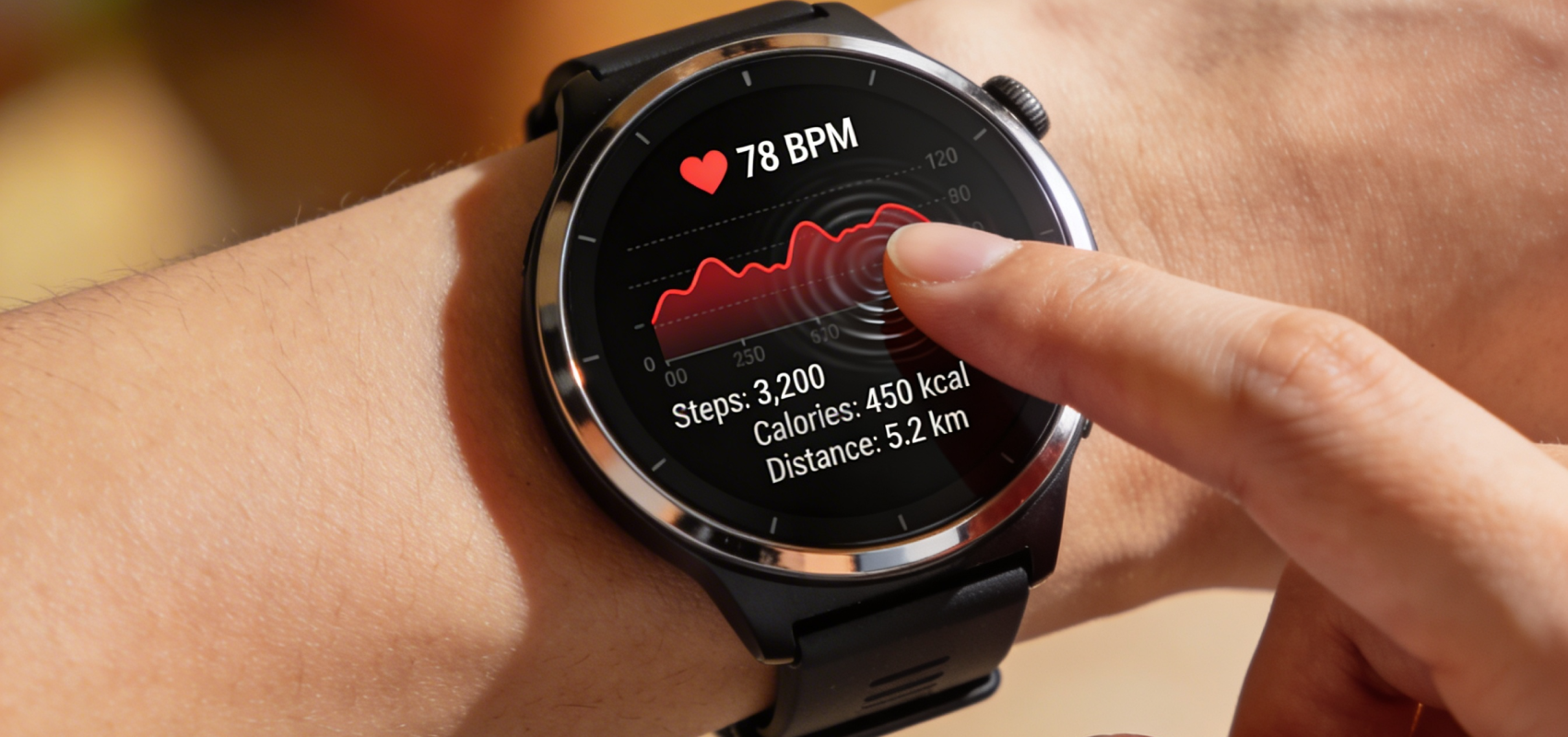
Mental health care is increasingly moving beyond the clinic. Unlike generic wellness apps, many digital therapeutics are developed and evaluated like formal medical treatments, raising expectations for their effectiveness. Digital therapeutics are expected to meet the same standards as other parts of the care pathway, including:
Solutions from Akili Interactive show how prescribed software integrates into routine care, allowing clinicians to monitor patients between visits while keeping outcomes measurable. Such integration represents a shift toward continuous, technology-driven mental health management, which experts predict will play an increasingly central role in healthcare by 2026.
Latency is now a healthcare risk.
Care increasingly happens across homes, ambulances, and satellite clinics, with devices streaming data and specialists collaborating remotely, all of which depend on a stable, real-time connection.
When connectivity falters, monitoring becomes inconsistent, and remote services are harder to scale. Faster, more reliable networks make it possible to support:
With dependable connections in place, these services operate reliably day to day, allowing remote care to become part of routine delivery rather than special projects.
All of these shifts point to one reality: leading HealthTech platforms are being built around autonomy. Routine work such as monitoring, documentation, and follow-ups is steadily moving into the background, handled automatically rather than manually.
As this becomes standard, roadmaps built on manual processes and disconnected tools grow harder to justify because they add complexity without improving results. The real question for 2026 is simple: where is your product still asking humans to do work that software could already handle?
These healthcare technology trends 2026 highlight a shift toward automation, scalability, and patient-centered innovation.
By embracing healthcare technology advancements in 2026, providers, patients, and innovators alike are shaping a more connected and intelligent care ecosystem, one that aligns seamlessly with the most critical HealthTech trends driving transformation across the industry.
.png)
.png)
.jpg)